
Medically reviewed by Eduardo Garrido Goico, MD, FAAP
Board-Certified Pediatrician and Co-Founder, Ages & Stages Pediatric Group
Originally published: August 16, 2019
Last medically reviewed: July 28, 2026
It is normal for children to occasionally become distracted, restless, impatient or impulsive. Young children are still developing the ability to focus, control their behavior and manage their emotions.
However, when attention difficulties, hyperactivity or impulsive behavior occur frequently, appear in more than one setting and interfere with school, relationships or everyday life, it may be appropriate to consider an evaluation for attention-deficit/hyperactivity disorder, commonly called ADHD.
ADHD is a neurodevelopmental condition that can affect a child’s attention, activity level and ability to pause before acting. It commonly begins during childhood and may continue through adolescence and adulthood.
Having some ADHD-like behaviors does not necessarily mean that a child has ADHD. A comprehensive evaluation is needed to understand what is causing the child’s difficulties and what type of support may help.
What Are the Signs of ADHD in Children?
ADHD symptoms generally fall into two broad groups:
- Inattention
- Hyperactivity and impulsivity
Some children mainly experience difficulty with attention. Others are more noticeably hyperactive or impulsive. Many children experience a combination of both.
Possible Signs of Inattention
A child with attention-related difficulties may:
- Have trouble staying focused on schoolwork or other activities
- Appear not to listen when spoken to directly
- Become distracted easily
- Make frequent careless mistakes
- Have difficulty following instructions or completing tasks
- Struggle to organize schoolwork, belongings or routines
- Avoid tasks that require sustained concentration
- Frequently lose homework, books, clothing or other belongings
- Forget everyday responsibilities
Every child may display some of these behaviors occasionally. With ADHD, the behaviors are persistent and create meaningful difficulty in the child’s life.
Possible Signs of Hyperactivity or Impulsivity
A child with hyperactive or impulsive symptoms may:
- Fidget, squirm or have difficulty remaining seated
- Run, climb or move around when it is not appropriate
- Seem constantly active or “on the go”
- Talk excessively
- Blurt out answers before a question is finished
- Have difficulty waiting for a turn
- Interrupt conversations, games or activities
- Act before considering the possible consequences
- Have trouble participating quietly in activities
Hyperactivity can become less physically obvious as children get older. In adolescents, it may appear as inner restlessness, impatience or difficulty slowing down.
ADHD Can Look Different From One Child to Another
ADHD is not always easy to recognize.
A highly active child may attract attention quickly, while a quiet child with primarily inattentive symptoms may struggle for years before anyone identifies the problem.
Some children compensate well in early grades and begin having difficulty only when schoolwork becomes more demanding. Others may perform well academically but struggle with organization, emotional regulation, friendships or completing routine tasks.
Girls with ADHD may be less likely to display obvious hyperactivity and may instead appear distracted, forgetful, overwhelmed or disorganized.
Because symptoms can vary, an evaluation should consider the child’s overall functioning rather than relying on one behavior or one person’s observations.
When Should Parents Consider an ADHD Evaluation?
Parents may want to speak with their pediatrician when a child’s attention, activity level or impulsive behavior:
- Happens frequently rather than occasionally
- Has continued for several months
- Appears at home and in another setting, such as school
- Interferes with learning or classroom behavior
- Causes conflict with family members or peers
- Makes everyday routines unusually difficult
- Affects confidence, mood or self-esteem
- Seems more significant than expected for the child’s age
An evaluation may also be helpful when a teacher repeatedly raises concerns about unfinished work, distractibility, classroom behavior or declining performance.
The goal is not to place a label on the child. The goal is to understand why the child is struggling and identify practical ways to help.
Is There a Test for ADHD?
There is no single blood test, brain scan or questionnaire that can diagnose ADHD.
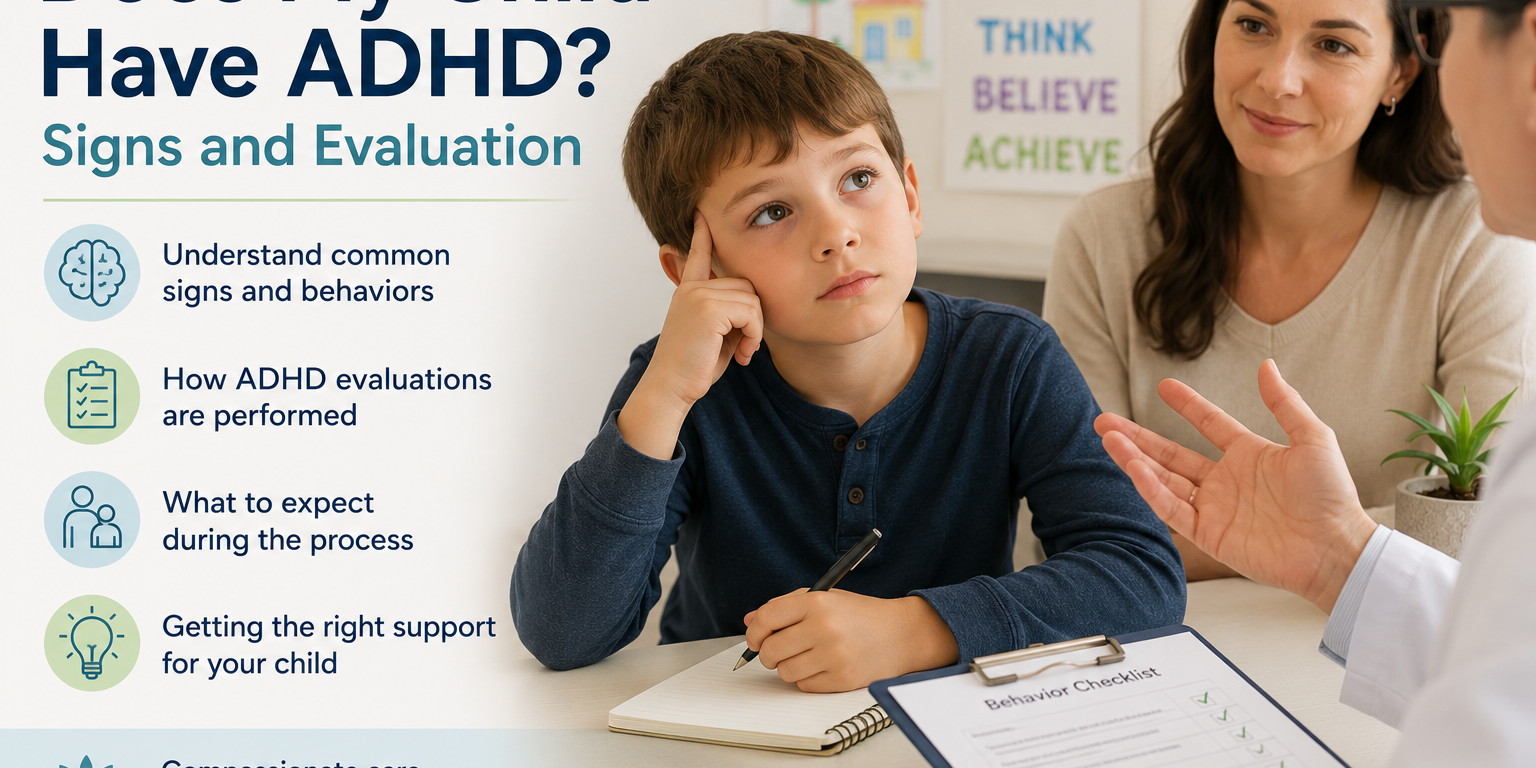
Instead, ADHD is diagnosed through a comprehensive evaluation. The process usually combines information from parents, teachers, caregivers and the child’s healthcare provider.
A medical evaluation may also be used to identify or rule out other conditions that can create symptoms resembling ADHD. The CDC notes that this may include a general medical examination and, when appropriate, hearing or vision testing.
Online quizzes may help parents organize their concerns, but they cannot confirm whether a child has ADHD.
At What Age Can a Child Be Evaluated for ADHD?
Ages & Stages Pediatric Group evaluates children for ADHD beginning at age 4.
Diagnosing ADHD in younger children requires careful consideration because attention span, activity level and impulse control change significantly during the early childhood years. The evaluation considers whether the child’s behavior is developmentally appropriate and whether the symptoms occur consistently in more than one setting.
What Happens During an ADHD Evaluation?
The exact process may differ depending on the child’s age and circumstances, but an ADHD evaluation commonly includes the following.
Parent and Child Interview
The pediatrician will ask about the child’s behavior, development, health, school performance, family history and daily routines.
Parents should be prepared to discuss:
- When the concerns began
- Where the behaviors occur
- How often they happen
- How they affect school and home life
- The child’s sleep habits
- Changes or stress within the family
- Academic or social difficulties
- Previous evaluations or treatments
Older children and adolescents should also have an opportunity to describe their own experiences.
Information From School
Because ADHD symptoms should be evaluated in more than one setting, information from teachers and school records is often an important part of the process.
Ages & Stages Pediatric Group may review:
- Teacher-completed Vanderbilt rating scales
- Report cards
- School evaluations
- Behavioral reports
- Individualized Education Program documents
- Section 504 Plan documents
- Other relevant records provided by the family
When appropriate and with parent or guardian authorization, the practice may also communicate with school personnel to better understand the child’s academic performance and classroom behavior.
Standardized ADHD Rating Scales
Ages & Stages Pediatric Group commonly uses the Vanderbilt ADHD Diagnostic Rating Scales as part of the evaluation process.
Separate forms may be completed by parents and teachers to provide information about the child’s behavior in different settings. The Vanderbilt scales can help identify patterns of inattention, hyperactivity and impulsivity, as well as possible concerns involving school performance, behavior, anxiety or mood.
The rating scales are only one part of the evaluation. They are considered together with a comprehensive medical assessment, the child’s developmental and health history, parent observations, teacher feedback and other relevant information.
Medical and Developmental History
The pediatrician may review:
- Pregnancy and birth history
- Developmental milestones
- Medical conditions
- Current medications
- Sleep patterns
- Hearing and vision
- Family medical and mental-health history
- Previous developmental, behavioral or educational concerns
Screening for Other Conditions
Several conditions can cause or worsen problems with attention, behavior or school performance.
An evaluation may consider:
- Anxiety
- Depression
- Learning disabilities
- Speech or language difficulties
- Autism spectrum disorder
- Sleep disorders
- Hearing or vision problems
- Trauma or significant stress
- Developmental delays
- Seizure disorders
- Medication effects
- Other medical or behavioral conditions
Children with ADHD may also have one or more coexisting conditions, so identifying ADHD does not necessarily explain every difficulty a child is experiencing. AAP guidance recommends screening for emotional, behavioral, developmental and physical conditions that may occur alongside ADHD.
What Are the Different Presentations of ADHD?
A child diagnosed with ADHD may be described as having one of three presentations.
Predominantly Inattentive Presentation
The child primarily has difficulty with focus, organization, following directions, remembering tasks and completing work.
Predominantly Hyperactive-Impulsive Presentation
The child primarily struggles with excessive activity, restlessness, interrupting, waiting and acting without thinking.
Combined Presentation
The child displays a significant pattern of both inattentive and hyperactive-impulsive symptoms.
A child’s presentation can change over time as the child grows and the demands of school and daily life change.
What Happens If My Child Is Diagnosed With ADHD?
An ADHD diagnosis should lead to an individualized treatment and support plan.
Treatment is not identical for every child. Recommendations may depend on:
- The child’s age
- The type and severity of symptoms
- School performance
- Family preferences
- Coexisting medical or behavioral conditions
- How symptoms affect everyday functioning
Treatment may include behavioral strategies, parent guidance, classroom supports and medication. For school-age children, recommendations commonly include a combination of medication and behavior therapy, with appropriate school-based support.
Behavioral Support
Behavioral strategies may help children develop routines, improve organization and receive clearer, more consistent feedback.
Parents may benefit from learning techniques such as:
- Setting clear expectations
- Breaking large tasks into smaller steps
- Using predictable schedules
- Giving immediate and specific praise
- Limiting distractions
- Providing consistent consequences
- Using charts, checklists or visual reminders
School Support
Some children benefit from classroom adjustments, including:
- Preferential seating
- Reduced distractions
- Written instructions
- Extra time for assignments or tests
- Movement breaks
- Organizational assistance
- A daily home-school communication system
- An Individualized Education Program or Section 504 Plan, when eligible
Medication
Medication may be recommended for some children.
There are stimulant and non-stimulant medications used to treat ADHD. The choice of medication depends on the individual child, including symptoms, age, medical history, side effects and response to treatment.
Medication should be monitored through regular follow-up appointments. The pediatrician may review symptom improvement, appetite, sleep, blood pressure, growth, mood and possible side effects.
Parents should not start, stop or change an ADHD medication without discussing it with the prescribing healthcare provider.
Ongoing ADHD Medication Management
ADHD care continues after medication is prescribed.
Children beginning ADHD medication are seen regularly so the pediatrician can monitor:
- Improvement in attention, impulsivity and behavior
- Appetite
- Sleep
- Growth
- Blood pressure
- Mood or behavioral changes
- Medication side effects
- School and home functioning
Follow-up visits allow the pediatrician and family to discuss how well treatment is working and make adjustments when necessary. A child’s medication needs may change as the child grows, develops and encounters new academic or social demands.
Parents should contact the prescribing provider before changing the dose, stopping medication or giving the medication differently than instructed.
Does an ADHD Diagnosis Mean My Child Cannot Succeed?
No.
Children with ADHD can be creative, energetic, curious and highly capable. They may also develop strong problem-solving skills and succeed academically, socially and professionally.
The greatest difficulty often occurs when a child’s needs are misunderstood or when the child repeatedly hears that they are careless, lazy or simply not trying hard enough.
Appropriate evaluation and support can help a child understand how their brain works, develop useful skills and build confidence.
The purpose of treatment is not to change the child’s personality. It is to reduce barriers that interfere with learning, relationships and daily life.
How Parents Can Prepare for an ADHD Appointment
Before the appointment, gather any information that may help the pediatrician understand the full picture.
Consider bringing:
- Report cards
- Teacher emails or notes
- School evaluations
- Behavior reports
- A list of current medications
- Previous psychological or developmental evaluations
- A summary of sleep habits
- Examples of the situations causing concern
- Questions about evaluation and treatment options
It may also be helpful to write down when the behaviors began and whether they occur in different settings.
Frequently Asked Questions About ADHD
Can a child have ADHD and still get good grades?
Yes. Some children with ADHD perform well academically, particularly when they are interested in the subject, have strong natural ability or receive significant support.
They may still struggle with organization, emotional regulation, completing work, managing time or maintaining attention during less engaging tasks.
Can anxiety look like ADHD?
Yes. Anxiety can cause distractibility, restlessness, forgetfulness, avoidance and difficulty concentrating.
Some children have both ADHD and anxiety. A complete evaluation helps determine which conditions may be contributing to the child’s symptoms.
Can poor sleep cause ADHD-like symptoms?
Insufficient or disrupted sleep can contribute to problems with attention, irritability, memory and behavior.
Sleep habits and possible sleep disorders should therefore be discussed during an ADHD evaluation.
Does my child need to be hyperactive to have ADHD?
No. A child may have predominantly inattentive ADHD without being unusually physically active.
These children may appear quiet, dreamy, forgetful or disorganized rather than disruptive.
Can a pediatrician evaluate and treat ADHD?
Pediatricians commonly evaluate and manage ADHD in children and adolescents.
In some situations, the pediatrician may recommend additional evaluation by a psychologist, psychiatrist, developmental specialist, neurologist, therapist or educational professional.
Will my child have to take medication?
Not necessarily.
Treatment recommendations depend on the child’s age, symptoms, level of impairment and individual circumstances. Parents and the pediatrician should discuss the benefits and possible risks of each available option.
ADHD Evaluations in Pineville and Gastonia
Ages & Stages Pediatric Group provides ADHD evaluations and ongoing medication management at both its Pineville and Gastonia offices.
The evaluation process may include Vanderbilt rating scales, a comprehensive medical assessment, parent and teacher information, school records and screening for other conditions that could affect attention, behavior or learning.
Contact Ages & Stages Pediatric Group to schedule an ADHD evaluation for a child age 4 or older.
About the Medical Reviewer
Eduardo Garrido Goico, MD, FAAP, is a board-certified pediatrician and co-founder of Ages & Stages Pediatric Group. He provides preventive, developmental, behavioral and general pediatric care for infants, children and adolescents.
Medical Disclaimer
This article is intended for general educational purposes only. It is not a substitute for diagnosis, treatment or individualized medical advice from your child’s healthcare provider. Contact a qualified healthcare professional if you have concerns about your child’s health, development, learning or behavior.